One Health
What is One Health?
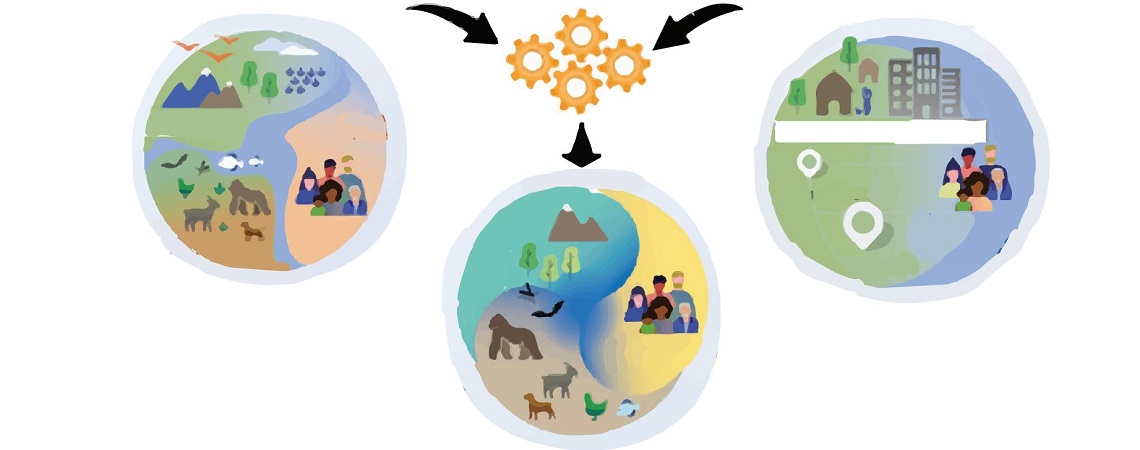
GRAPHIC BY THE WORLD HEALTH ORGANIZATION’S ONE HEALTH HIGH-LEVEL EXPERT PANEL (OHHLEP)
“One Health is an integrated, unifying approach that aims to sustainably balance and optimize the health of people, animals, and ecosystems. It recognizes the health of humans, domestic and wild animals, plants, and the wider environment (including ecosystems) are closely linked and interdependent. The approach mobilizes multiple sectors, disciplines, and communities at varying levels of society to work together to foster well-being and tackle threats to health and ecosystems, while addressing the collective need for healthy food, water, energy, and air, taking action on climate change and contributing to sustainable development.”
One Health High-Level Expert Panel (OHHLEP), Adisasmito WB, Almuhairi S, Behravesh CB, et al. One Health: a new definition for a sustainable and healthy future. PLoS Pathog 2022; 18: e1010537
At GHI, we believe in the Wisconsin Idea and understanding solutions to global health issues begins with investing in local conversations. Introducing healthy, sustainable food choices. Discovering new viruses before they make the jump from animals to humans. Protecting water sources. Contributing to a safer and more equitable world for all.
These are the ways in which the concept of One Health makes a difference in our lives, the life around us and the planet. This is the idea that the health of humans, animals and the planet are tied together, and we must see them as a whole.
Human health depends on animal health depends on planetary health and vice versa.
One Health calls for collaboration. Between human health care providers, entomologists, engineers, sociologists, dairy and nutrition experts, climate scientists, public health practitioners and more.
Addressing the determinants of health and disease. Learning from communities and colleagues. Sharing knowledge. Finding solutions. Living the Wisconsin Idea.