

News
Welcome to the Global Health Institute news page.
If you have news to share with GHI, click here to contact us.
All GHI News
-
Six-Legged Livestock Could Solve Food Shortages — Sustainably
In the Midwest, we’re used to seeing big fields dotted with cattle and steel barns bustling with broiler chickens. Beef, poultry, and pork are common in our daily meals, whether mixed in pasta or placed on a bun. But in many countries, where food shortages are common, such protein abundance is a luxury. To help…
-
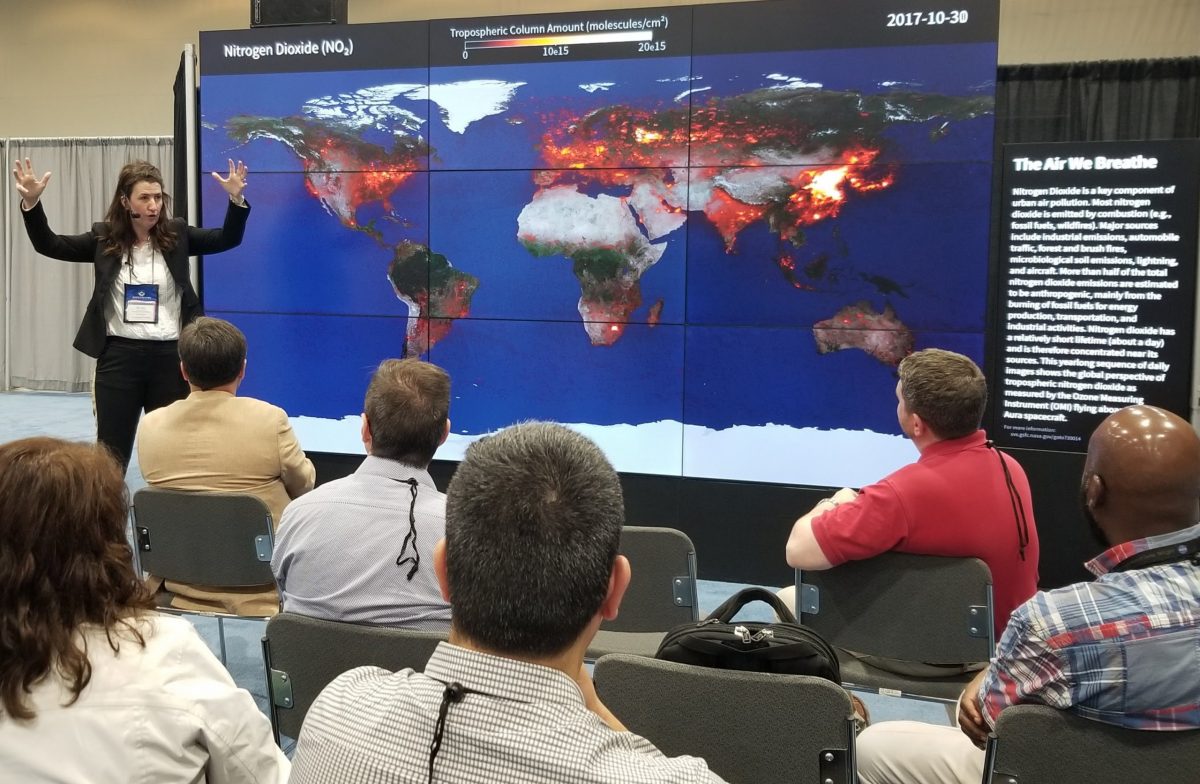
UW atmospheric scientist bridges science, policy, public health to bring space-based data to the world
For atmospheric scientist Tracey Holloway, it’s all about connection. Connections between research and policy, connections between air quality and health, and interpersonal connections have driven Holloway, a professor in the Nelson Institute for Environmental Studies and Department of Atmospheric and Oceanic Sciences at the University of Wisconsin–Madison, throughout her career. The connections she makes with…
-
New Major Improves Student Prep for Global Health Field
The past year has shone an intense spotlight on public health efforts all over the world. Their complexity, their interconnectedness, and their importance have never been more apparent as they have been during a global pandemic. It’s timely, then, that UW–Madison is launching a new global health major. It’s an expansion of the existing global…
-

Symposium keynote will look to Indigenous philosophies as a recipe to living well
Mariaelena Huambachano has spent her life crossing cultures: Of Quechua lineage, she was born and raised in Chorillos, Peru, and, at 19, immigrated to Aotearoa New Zealand. She earned her master’s and doctoral degrees to give voice to Indigenous ways of being in Western academia. On April 14, the assistant professor of Civil Society and…
-

Another way to prevent disease: Don’t mess with Mother Nature
Trees along the Nanay River in the Peruvian rainforest fell as the population exploded, a road was paved and fields expanded. Researchers, including Jonathan Patz, director of the University of Wisconsin-Madison Global Health Institute (GHI), showed the rate of bites from malaria-carrying mosquitoes was more than 200 times higher than in forested areas. Diseases emerge…