
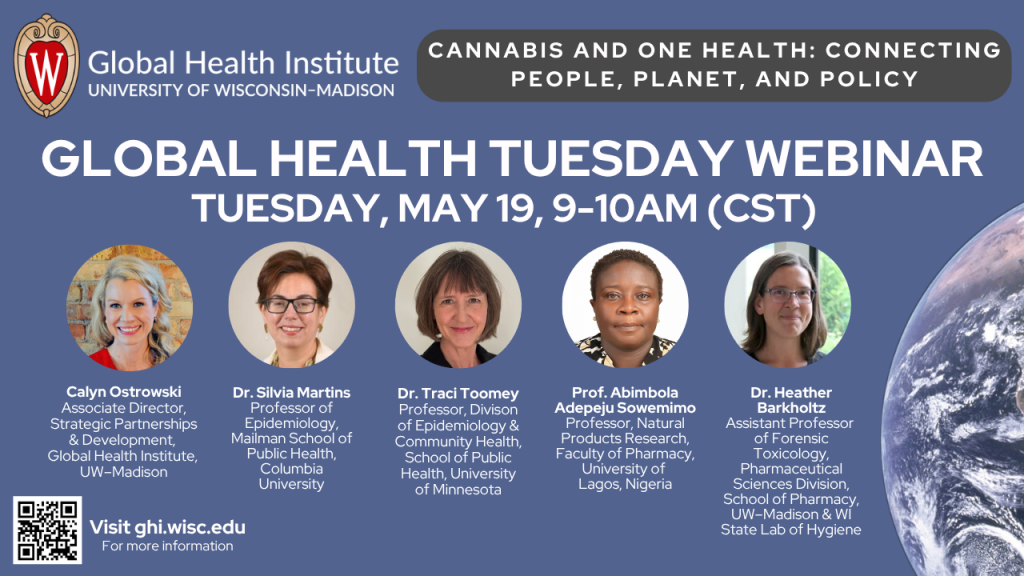
The Global Health Institute’s (GHI) May Global Health Tuesday Webinar is scheduled for Tuesday, May 19, 2026, from 9-10am CST, where the discussion will focus on Cannabis and One Health: Connecting People, Planet, and Policy. This virtual event will explore the interdisciplinary applications of cannabis across medicine, agriculture, sustainability, and policy, continuing our commitment to advancing dialogue, research, and opportunities for collaboration in this space.
Calyn Ostrowski, Associate Director of Strategic Partnerships & Development, GHI, leads the discussion with panelists Dr. Silvia Martins, Professor of Epidemiology, Mailman School of Public Health, Columbia University; Dr. Traci Toomey, Professor, Division of Epidemiology & Community Health, School of Public Health, University of Minnesota; Prof. Abimbola Adepeju Sowemimo, Natural Products Research, Faculty of Pharmacy, University of Lagos, Nigeria; and Dr. Heather Barkholtz, Assistant Director of Forensic Toxicology, Pharmaceutical Sciences Division, School of Pharmacy, UW–Madison and Wisconsin State Lab of Hygiene.
Please register for the webinar with this link.
MEET THE MODERATOR:

CALYN OSTROWSKI
Associate Director, Strategic Partnerships & Development, Global Health Institute, UW–Madison
Calyn Ostrowski builds high-impact partnerships through cross-sector and multi-disciplinary collaboration. As the Associate Director of Strategic Partnerships & Development at the Global Health Institute (GHI), she leads a diverse portfolio of work mobilizing relationships with leaders in academia, government, industry, and community organizations to drive strategic initiatives that advance statewide and global health priorities.
Prior to joining UW, she led the Worldwide Foundation for Credit Unions as Executive Director, overseeing operations, fiscal management, governance, grantmaking, fundraising, and program strategy. She later served as Managing Vice President of Business Development at Summit Credit Union, where she was the chief strategist for business development initiatives and financial education programs. Earlier in her career, she worked at the Woodrow Wilson Center, a nonpartisan foreign policy think tank in Washington, DC, where she convened global stakeholders on health policy issues and disseminated findings through reports, toolkits, public events, and digital platforms.
Calyn is an active member of the community, serving on multiple nonprofit boards. She has a master’s degree in nonprofit management from Case Western Reserve University and bachelor’s degree in political science and psychology from the University of Wisconsin-Madison where she was a member of the Women’s Swim and Dive team.
MEET THE PANELISTS:
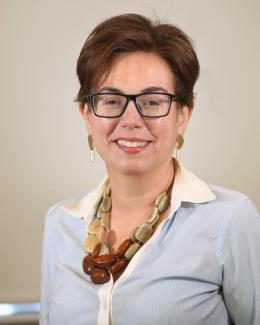
DR. SILVIA MARTINS
Professor of Epidemiology, Mailman School of Public Health, Columbia University
Dr. Silvia S. Martins is the Director of the Substance Use Epidemiology Unit of the Department of Epidemiology, Columbia University Mailman School of Public Health and of the Policy and Health Initiatives on Opioids and other Substances interdisciplinary group. She is also the Co-Director of the NIDA T32 Substance Abuse Epidemiology Training Program in the department.
She has co-authored more than 320 peer-reviewed epidemiological and substance use articles (>120 first or senior-authored), 100 of them led by her current or former mentees. She has served as PI or MPI of multiple NIH funded grants. Some of her notable research findings have focused on a typology of prescription drug monitoring programs and its impact on prescription opioid and heroin overdoses, machine learning techniques to better understand opioid policies associated with high-opioid prescribing, the effects of recreational cannabis laws in cannabis use outcomes in adolescents and adults in the US, and substance use and psychiatric disorders in child and adolescents in Brazil.
She has received several awards for her research and mentoring, including, the Columbia University Mailman School of Public Health Dean’s Award for Excellence in Mentoring, Columbia University Irving Medical Center Mentor of the Year, and a 2021 Calderone Health Equity award. Her current research focuses on consequences of medical and recreational cannabis laws in the U.S, the synergistic effects of opioid policies and cannabis policies on opioid-related harm outcomes in the U.S., the effects of opioid policies and substance use policies that target pregnant and postpartum women among women that use opioids in the U.S., and trends in drug overdoses in Latin America.

DR. SILVIA MARTINS
Professor, Division of Epidemiology & Community Health, School of Public Health, University of Minnesota
Dr. Toomey is the Director of the University of Minnesota School of Public Health Cannabis Research Center, and is also the Director of the Alcohol Epidemiology Program (AEP) at the University of Minnesota. AEP is one of the leading research groups studying effects of alcohol policies on public health harms.
Dr. Toomey is an expert in public health policy, with a particular expertise in substance use control policies. She has served as the principal investigator or co-investigator of nearly 40 externally-funded research studies focusing on substance use (alcohol, cannabis, tobacco). She has been a leader on a series of studies assessing and/or changing the alcohol, cannabis, and tobacco retail environments, and on studies measuring the prevalence, strength, and effects of local and state substance-use-related policies.
She is also a global expert in prevention strategies to reduce underage and college student drinking. She was an author on seminal review articles commissioned by the National Institute on Alcohol Abuse and Alcoholism (NIAAA)—one on effects of the minimum legal drinking age and two on policies and strategies to prevent and reduce college student drinking. She led the team that developed the summary of environmental strategies for NIAAA’s College Alcohol Intervention Matrix, a comprehensive guide for addressing college student alcohol use. Her research has been funded by the NIAAA, Department of Defense, Centers for Disease Control and Prevention, National Cancer Institute, Insurance Institute for Highway Safety, and Robert Wood Johnson Foundation. Additionally, Dr. Toomey has 15 years of administrative leadership and is an award-winning instructor and advisor.
Dr. Toomey’s research expertise has been instrumental in many community outreach efforts. She has served: (1) on Mothers Against Drunk Driving (MADD) Board of Directors, (2) as a consultant for the Congress for the Sober Truth on Preventing Underage Drinking (STOP) Act, (3) on the Advisory Board for the U.S. Alcohol Policy Alliance (Co-chair), (4) on the Coordination Team of the CDC Guide to Community Preventive Services Alcohol Initiative, and (5) on the Center for Advancing Alcohol Science to Practice core team.
The work of Dr. Toomey and her colleagues has led to changes in policy and practice throughout the U.S.

PROF. ABIMBOLA ADEPEJU SOWEMIMO
Professor, Natural Products Research, Faculty of Pharmacy, University of Lagos, Nigeria
Prof. Abimbola Adepeju Sowemimo is a natural products researcher with a strong passion for unlocking the pharmacological potential of Nigerian medicinal plants at the University of Lagos in Nigeria. Her work focuses on the phytochemical investigation, isolation of bioactive compounds, and elucidation of their mechanisms of action, especially those used in traditional cancer therapies.
With hands-on experience in pharmacological and toxicological evaluation, she collaborates with research teams to explore plant-based solutions for drug discovery. She is deeply committed to mentoring young scientists and advancing local knowledge with goals to develop lead compounds from indigenous plants that can contribute to evidence-based drug development and improved healthcare outcomes in Africa.
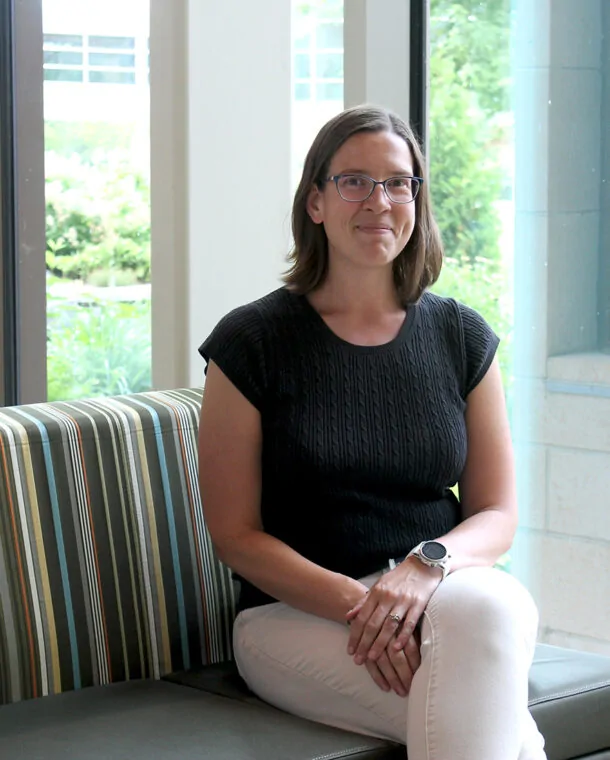
DR. HEATHER BARKHOLZ
Assistant Professor of Forensic Toxicology, School of Pharmacy, Pharmaceutical Scienes & Wisconsin State Laboratory of Hygiene, Forensic Toxicology
Dr. Barkholtz is a Forensic Toxicologist with join appointments with the UW–Madison School of Pharmacy and the Wisconsin State Laboratory of Hygiene, the state’s public health laboratory that processes samples from impaired drivers statewide. Her latest research projects have critical implications for road safety, including a clinical trial to validate a tool for measuring driver impairment, and a study on the effects of THC on driver performance.
For Dr. Barkholtz, she notes forensic toxicology, particularly the detection of drugs of abuse and understanding their action in the human body, is a critical public health issue. Many drugs, including illicit, prescription, and over-the-counter drugs, have impairing effects. These drugs may impair coordination, reaction time, tracking, judgement, attention, and perception. If taken in high doses or in combination with other drugs, they can result in overdoses requiring emergency medical intervention. However, intra- and inter-personal variations in drug distribution, effects, and outcomes are not well understood. I take a interdisciplinary approach and partner with public health stakeholders to add to the body of knowledge surrounding drug of abuse action and detection in the body.