INCLUSION IS KEY WITH THE UW RWANDA COLLABORATIVE
By Katie Newcomb, GHI Communications Director…UW–Madison continues to inspire those who want to make a difference in public health on a global scale, while also reinforcing the heart of the Wisconsin Idea – sharing knowledge beyond campus borders.
Researchers, students faculty, and staff at UW–Madison make up our special shared campus, which hosts many disciplines and schools of thought to spark collaboration. That is exactly what is at the heart of the UW Rwanda Collaborative – working together to broaden minds, expand knowledge, and build bridges rather than chasms.
In 2025, this collaborative started with an idea and Dr. Jessica Schmidt’s, Associate Professor and Division Chief of Global Health in the Department of Emergency Medicine at the Wisconsin School of Medicine and Public Health (SMPH), desire to bring global health researchers together to see what is possible in Rwanda.
In a short period of time, the group of SMPH leaders engaged in Rwanda has grown, and continues to expand, with increasing interest to create new partnerships from both internal actors and members outside the university.
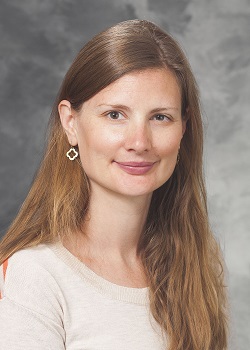
“There is so much great work going on in the institution, in the country of Rwanda, with multiple partners at multiple institutions, even in multiple cities within Rwanda, that we wanted to create this collaborative so we could come together to share our work and ideas to see how we could help each other and build on work that is already being done to see if it can grow even further.”
Drs. Jessica Schmidt and Dawd Siraj, both respected leaders in different disciplines at the Wisconsin School of Medicine and Public Health (SMPH), are dedicated professionals committed to advancing public health. Both have worked on different projects in Africa, including Rwanda, and found each other through mutual connections at SMPH. Each knew of other researchers doing impactful work in Rwanda and saw the opportunity to strengthen projects through connection. That’s when the UW Rwanda Collaborative started to take shape earlier this year.
Dr. Jessica Schmidt with Dr. Ruterana Destiny, a resident at Africa Health Sciences University, Kigali, Rwanda, May 2025 (photo courtesy J. Schmidt)
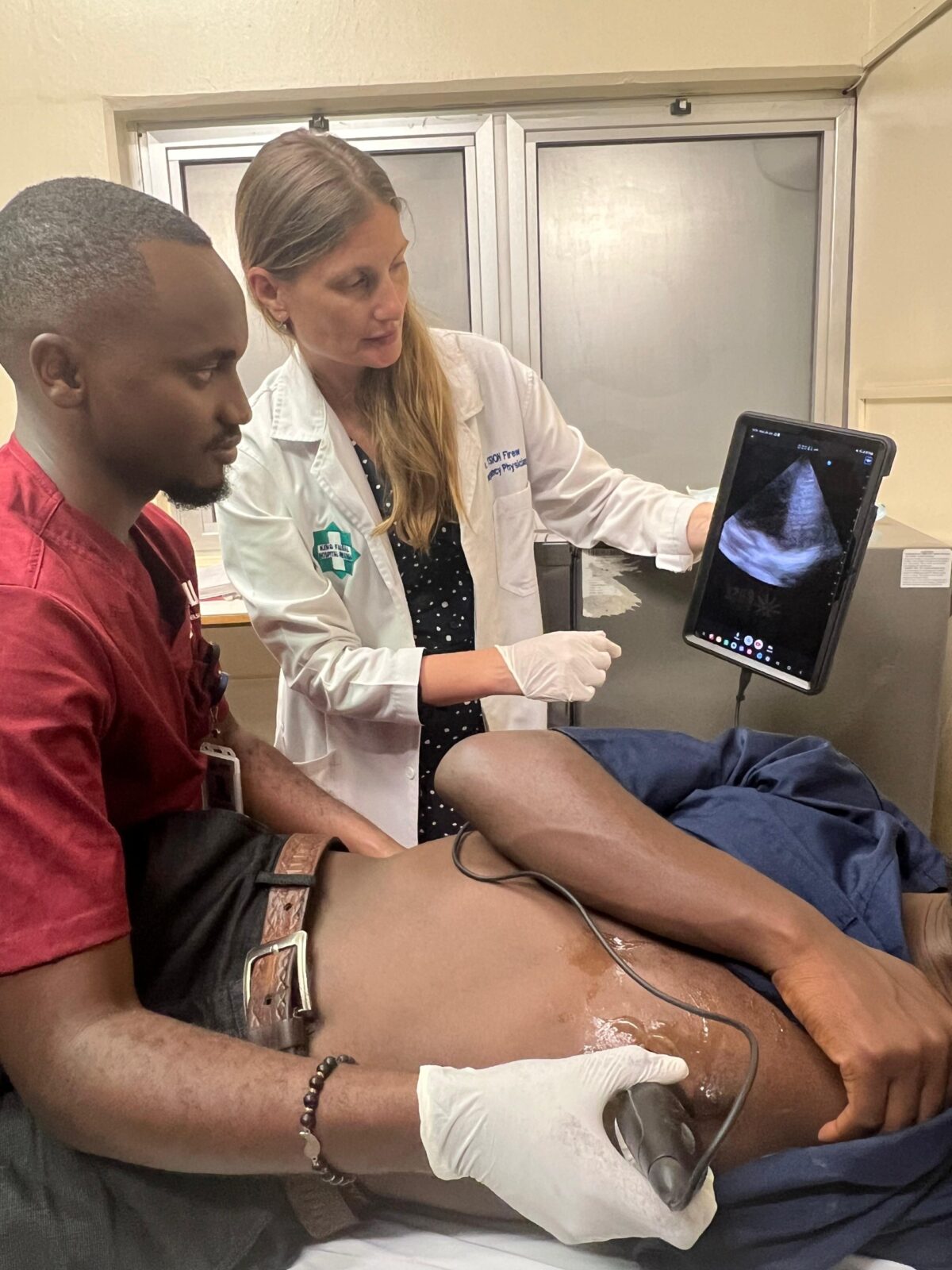
Dr. Siraj suggests, “If the framework we are building, of how to build programs in Rwanda, succeeds, this could be a template for future global health programs at UW.”

“Because there is much work being done by UW researchers in Rwanda, most of which utilize similar partners and must follow similar protocols, we wanted to create a template of best practices for those coming behind us, making it easier for them to identify who the key partners are and how to go about establishing collaborations.”
Currently, participants are from multiple disciplines at SMPH, including emergency medicine, internal medicine, infectious disease, pediatrics, anesthesia, surgery, and more. “A lot of this has been word of mouth, but we extended an invitation to anyone we knew, or heard of, that is working in Rwanda,” Dr. Schmidt shared.
UW Drs. Dawd Siraj, James Conway, and Daniel Shirley with partners in Rwanda, (photo courtesy D. Siraj)
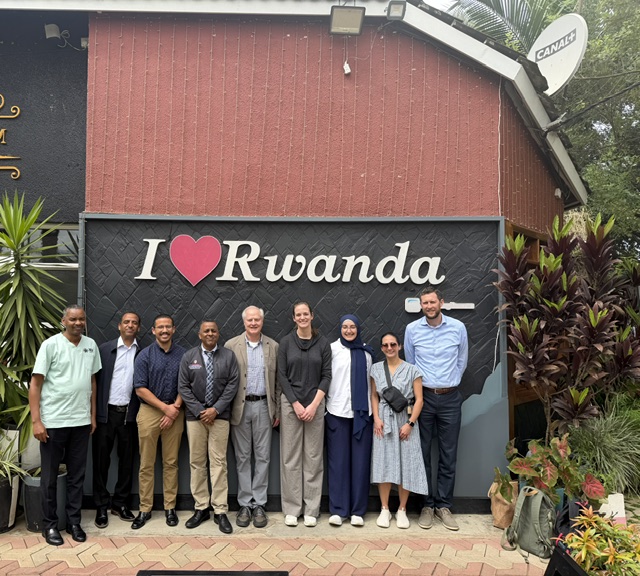
But since this is a new academic group, there needed to be guidance and structure. Thus, a working manual was created to identify purpose and scope. The purpose is, “to facilitate communications, knowledge-sharing, and mutual learning among departments, divisions, and programs within University of Wisconsin Madison School of Medicine & Public Health that currently maintain – or plan to develop – collaborative relationships with parter institutions in Rwanda.”

“I think the UW Rwanda Collaborative is a phenomenal initiative; global health work can easily fall into silos, even within individual institutions, and bringing like-minded individuals together within UW has really helped expand our efforts, increase motivation, and allow us to work together as a team even more!”
The group identified five principles to help guide global health engagement in Rwanda. They include Reciprocity & Equity, Sustainability, Ethical Practice, Transparency & Coordination, and Capacity Strengthening. The group also identified the governance and leadership structure, with Dr. Schmidt serving as the U.S.-based coordination lead and Dr. Siraj serving as the Rwanda partnership and relationship lead.
Drs. Dawd Siraj and James Conway, and Vice Provost & Dean, International Division, Frances Vavrus, sign MOU, (courtesy D. Siraj)
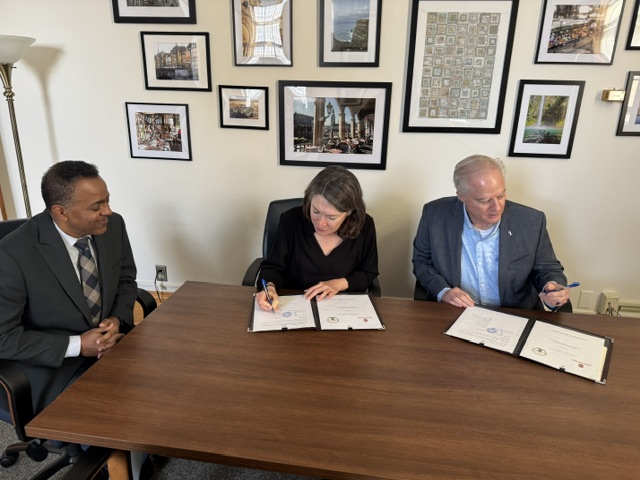
Dr. Siraj shares opportunities to get involved with this example from a recent trip to Rwanda, “After presenting on HIV, infectious diseases, and the partnerships at UW, a dermatologist in the audience came up to me and shared how he wanted to create similar partnerships within dermatology. I brought that idea back and spoke with UW’s head of dermatology. Long story short, we’ve now had two Zoom conferences, and a UW point person has been identified to lead efforts with a global health dermatology program.”
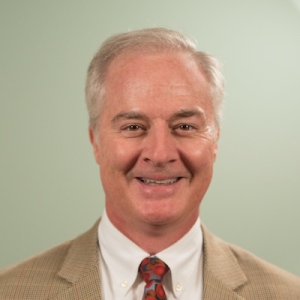
“The key to successful partnerships is developing trust and respect among the participants. But to have a truly meaningful impact, there needs to be empowerment to prioritize the areas of greatest need, so that clear goals can be identified. The UW Rwanda Collaborative has brought together professionals from several disciplines, with varying experience and areas of interest. This group is already developing training programs to address the highest priority needs identified by the Rwandan partners. There is already momentum and excitement to see what can be achieved by working together in such a multidisciplinary partnership.”
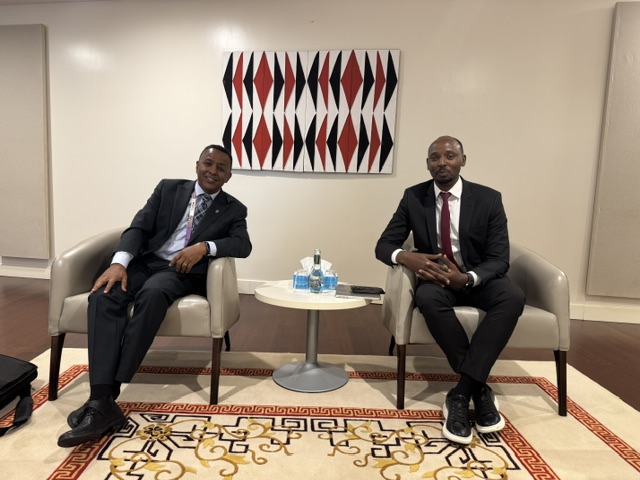
These programs only succeed with the proactive relationship building within the country of Rwanda. This is true for health systems and the Rwanda Ministry of Health. “The nature of global health, one thing we learned, is you have to meet people where the need is. We don’t want to tell them what we want to do and then ask them to help us. We want to be inclusive and know their priorities,” said Dr. Siraj.
(Dr. Dawd Siraj and Dr. Sabin Nsanzimana, Rwanda Minister of Health (photo courtesy D. Siraj)
“Part of why this collaborative works so well is because Rwanda is a relatively small country, about the size of Massachusetts,” Dr. Schmidt shared. “There are only a few number of academic institutions within Rwanda and many times work overlaps and we already all know each other.” “Yes,” Dr. Siraj confirmed. “This collaborative was really to codify and give a structure to the work that is already being done.”
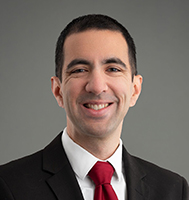
“Having colleagues to discuss shared experiences and develop ideas has been invaluable. Lasting healthcare infrastructure is built not by isolated projects, but through collaboration.”
Collaboration and exposing minds to new experiences and cultures produces stronger community health outcomes. The UW Rwanda Collaborative is just one example of why the talent at UW–Madison sets itself apart, and is the reason why the university is uniquely poised to lead in the community and global health space.
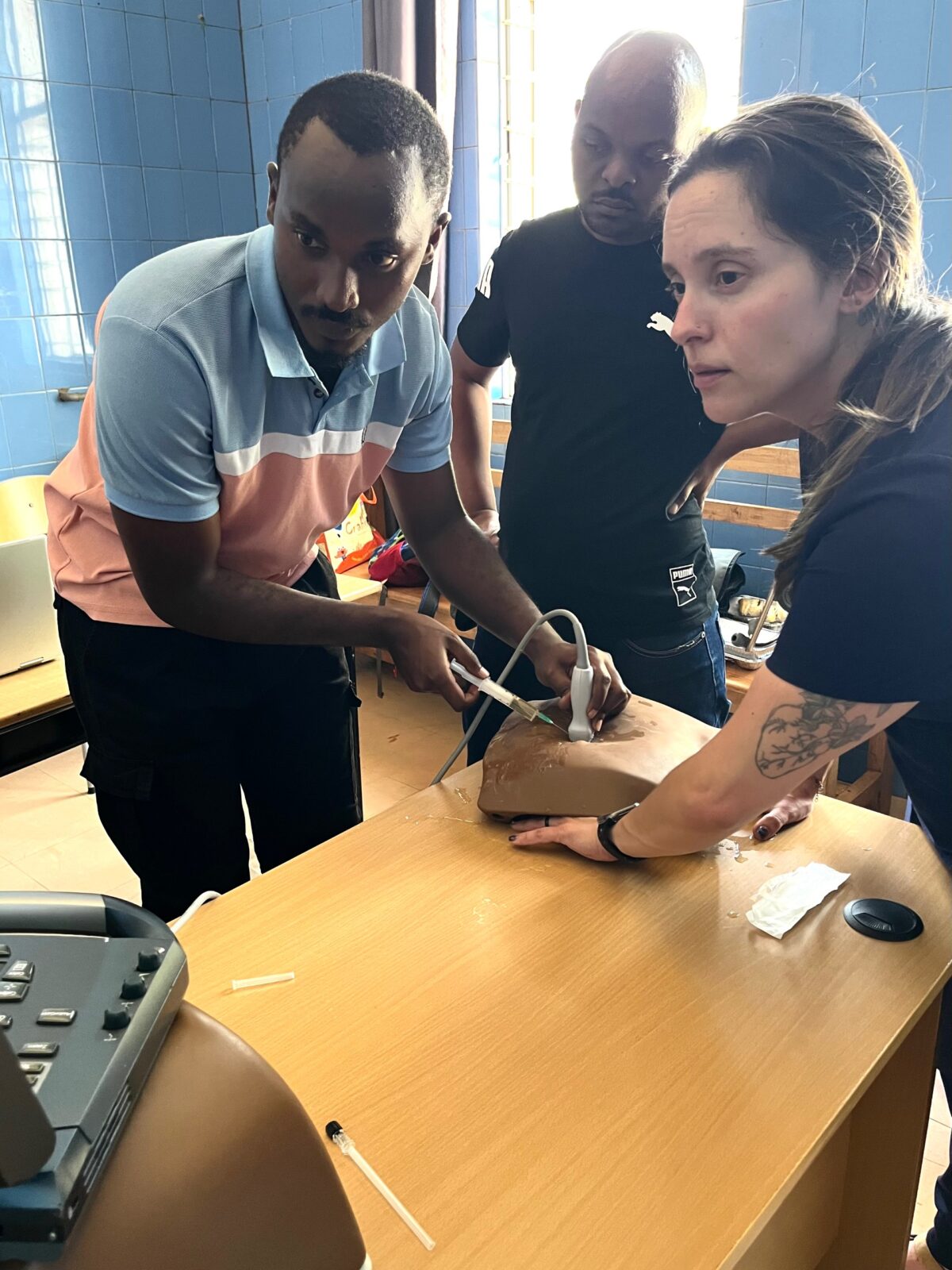
Dr. Brittany Kotek, former UW Emergency Medicine Resident & Global Health Fellow, practicing pericardiocentesis on a homemade simulation model with AHSU residents in March 2025, (photo courtesy J. Schmidt)
For more information on the UW Rwanda Collaborative, or if you are interested in joining this collaboration, please reach out to Dr. Schmidt at jschmidt@medicine.wisc.edu or Dr. Dawd Sirja at dssiraj@medicine.wisc.edu.